A tu negocio le falta el QR Nequi

Creator
Nequi. Individual production credits are not listed on the video page.
Date
June 21, 2024.
Course themes
Representation · Identity
Technology connection
Digital payments and small businesses.

Nequi advertisement preview showing a driver and a message about receiving payments from banks
Preview of Nequi’s 2024 QR Negocios advertisement. Nequi / YouTube. Image source. Tap to enlarge.

This Nequi advertisement promotes QR payments for small businesses. Its title tells viewers that their business is missing a Nequi QR code. The preview places the message in an everyday driving scene instead of a bank office. It presents digital payments as something that belongs in ordinary working life.

I chose the advertisement because it is a piece of Colombian consumer culture, not a study about it. The casual wording makes the product feel familiar. The message also creates pressure to keep up. A business without this payment option can start to seem behind. That is a marketing choice, not proof that every business needs the service.

This connects to Bermeo-Giraldo and colleagues’ research on fintech adoption. Their study considers social influence and perceived usefulness. The ad shows how a company tries to shape those perceptions. It also connects to Parra-Sánchez and colleagues’ work on smaller businesses adopting technology. The course themes are representation and identity. The ad invites everyday business owners to see themselves as digital entrepreneurs. Its claims describe the 2024 campaign, not guaranteed service terms today.

Back to gallery list ↑

Mapa telegráfico de la República de Colombia

Creator
Colombia, Ministerio de Relaciones Exteriores, Oficina de Longitudes.
Date
1925.
Technology connection
Communication networks and unequal regional access.
Course themes
Regional diversity · Globalization
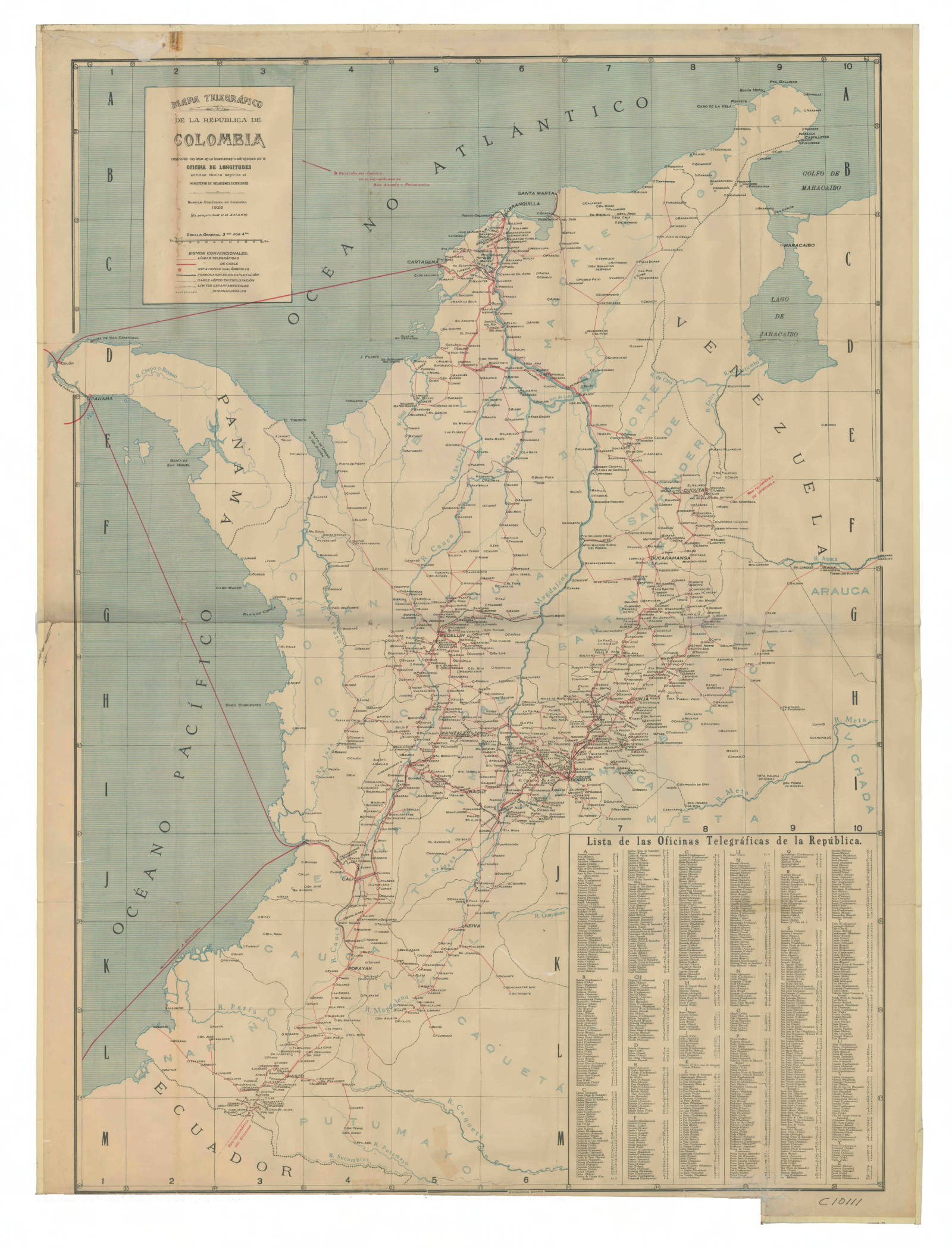
1925 map of Colombia showing telegraph routes and a list of telegraph offices
1925 telegraph map. Banco de la República digital collection. Public domain. Image source. Tap the map to see it larger.

This map shows Colombia’s telegraph network in 1925. It also includes railways, waterways, aerial cables, settlements and political boundaries. A list identifies telegraph offices around the country. Seeing these routes together makes communication feel physical. Messages depended on stations, equipment and people keeping the system working.

I selected it because the internet can seem invisible until it stops working. This older network makes the same basic problem easier to see. Connecting a country requires choices about where infrastructure goes. The map helps me think about today’s broadband networks without assuming that a newer system automatically reaches everyone. A line on a map also does not prove that every nearby person could afford or reliably use the service.

The course themes are regional diversity and globalization. Colombia’s geography shaped the routes used to connect places. Connections beyond its borders linked the country with wider networks. Those choices mattered for participation in trade and public life. For my project, the useful question is not just how fast messages travel. It is who gets connected and who is still waiting.

This offers historical context for the OECD connectivity review and Hidalgo and Sovinsky’s questions about useful access.

Back to gallery list ↑

Radio Sutatenza transmitter inauguration

Creator
Oficina de Información y Propaganda del Estado (ODIPE). Narration by Otto Greiffestein.
Date
November 7, 1954. Archive article published November 7, 2024.
Course themes
Representation · Regional diversity
Technology connection
Radio technology, rural education and political messaging.
Black and white preview of the archived Radio Sutatenza newsreel
Preview of the archived Radio Sutatenza footage. ODIPE / Señal Memoria, RTVC. Image source. Tap to enlarge.

This government newsreel shows Gustavo Rojas Pinilla visiting the inauguration of a Radio Sutatenza transmitter and new equipment. The radio schools were part of Acción Cultural Popular, or ACPO. Radio offered a way to bring educational material to rural communities without building a classroom in every location. The footage presents the new infrastructure as an achievement.

I chose this because it brings education, technology and politics into the same scene. A transmitter can expand what people hear and learn. At the same time, the government can use images of that equipment to promote itself. The film tells me how the event was presented. It does not prove how much every listener learned.

This connects to representation and regional diversity. Rural communities appear within a national story about progress, but the camera and narration shape that story. It makes me think about current digital education projects. Providing devices or a connection is a start. Teachers, useful material, local involvement and continued support also matter. Technology should be judged by what people can actually do with it.

I connect this historical example to Barrios Aguirre’s education study, while recognizing that radio learning and home internet are different.

Back to gallery list ↑

60 años al aire: the first television broadcast

Creator
Jorge Alí Triana; RTVC Sistema de Medios Públicos. Archive reference ND-702331, clip 9.
Date
2014 documentary about the June 13, 1954 launch. Archive article published June 13, 2025.
Course themes
Identity · Representation
Technology connection
Broadcasting and the way Colombians share national events.
Señal Memoria video preview showing an early television broadcast
Archive video preview for the first-broadcast documentary excerpt. Señal Memoria, RTVC. Image source. Tap to enlarge.

This documentary excerpt looks back at Colombia’s first television broadcast. The opening program included a presidential address, news, music and drama. Television brought these different forms into one shared screen. It was a new way to experience politics and performance without being at the event in person.

I picked it because technology changes more than how quickly information moves. It also changes what people see together. A television schedule can help create a shared idea of national life. Still, not everyone had a receiver. The institutions behind the broadcast also chose which people and stories appeared. A shared screen does not mean that everyone had an equal voice.

This connects to identity and representation. Television helped present an image of Colombia, but that image came from specific decisions in a political setting. I see a connection to streaming and social platforms today. More ways to publish can create opportunities, but visibility still depends on access and control. For my project, the important question is who gets to tell the story when a new medium arrives.

This offers historical context for the World Bank report’s discussion of digital platforms and participation, rather than evidence about today’s internet.

Back to gallery list ↑

Partes de la computadora personal y cómo funciona

Creator
Diagram credited to TIME in the image. Published by El Tiempo. Individual illustrator not named in the reproduction.
Date
March 2, 1983, El Tiempo, Section D, page 6. Reproduced in Asociación Colombiana de Historiadores’ 2023 magazine, page 40.
Course themes
Globalization · Representation
Technology connection
Personal computing and how people learn to use new tools.
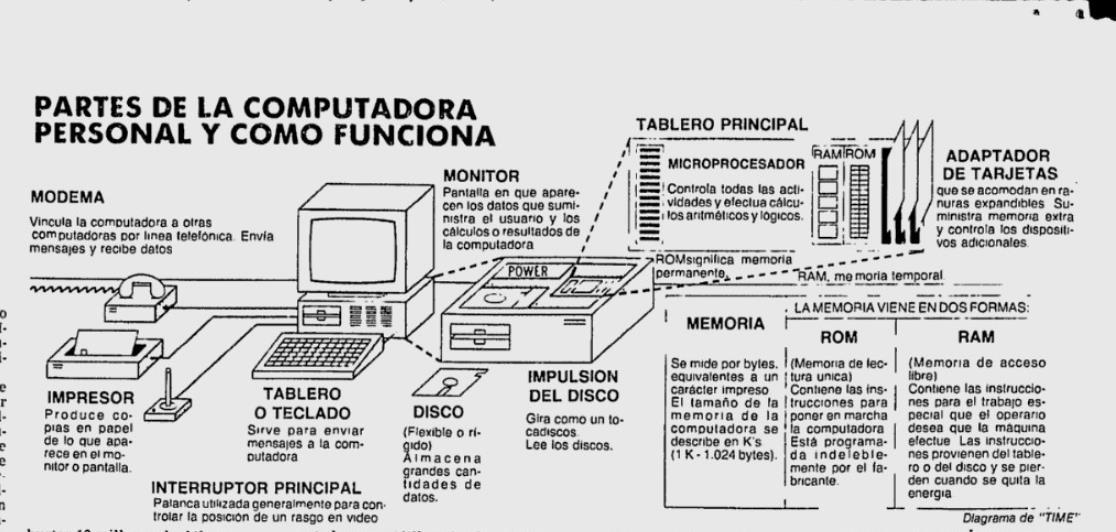
1983 diagram labeling a computer monitor, keyboard, modem, memory and printer
Diagram credited to TIME. El Tiempo, March 2, 1983. Reproduced by Asociación Colombiana de Historiadores, 2023, p. 40. Image source. Tap to enlarge.

This newspaper diagram explains a personal computer by labeling its parts. It shows a keyboard, monitor, printer, modem, memory and other components. The magazine reproducing it connects the coverage to computer displays at the International Fair of Bogotá in 1983. The picture turns a complicated machine into smaller pieces a reader can recognize.

I selected it because learning technology is part of using it. People are not born knowing what a modem or processor does. A newspaper could introduce that knowledge outside a classroom. As a Computer Science major, I like how the diagram gives readers a starting point. It also reminds me that an explanation can make a new product seem less intimidating.

This connects to globalization and representation. The image credits TIME, while El Tiempo brought it into a Colombian newspaper. Technical information was moving between media and audiences. The diagram presents computing as something people could understand. I see a similar need with AI today. Clear explanations help people evaluate a technology’s promises instead of accepting them just because the product sounds advanced.

This illustrates the skills question behind Parra-Sánchez’s business study. Understanding a tool is part of being ready to adopt it.

Back to gallery list ↑

Music at the launch of La Cachuda

Creator
Photograph credited to Colnodo. Performers: Escuela Cultural Panas del Pacífico.
Date
Launch held April 30, 2025. Photograph published May 21, 2025.
Course themes
Tradition · Regional diversity
Technology connection
A community internet network in Juanchaco and Ladrilleros, Buenaventura.
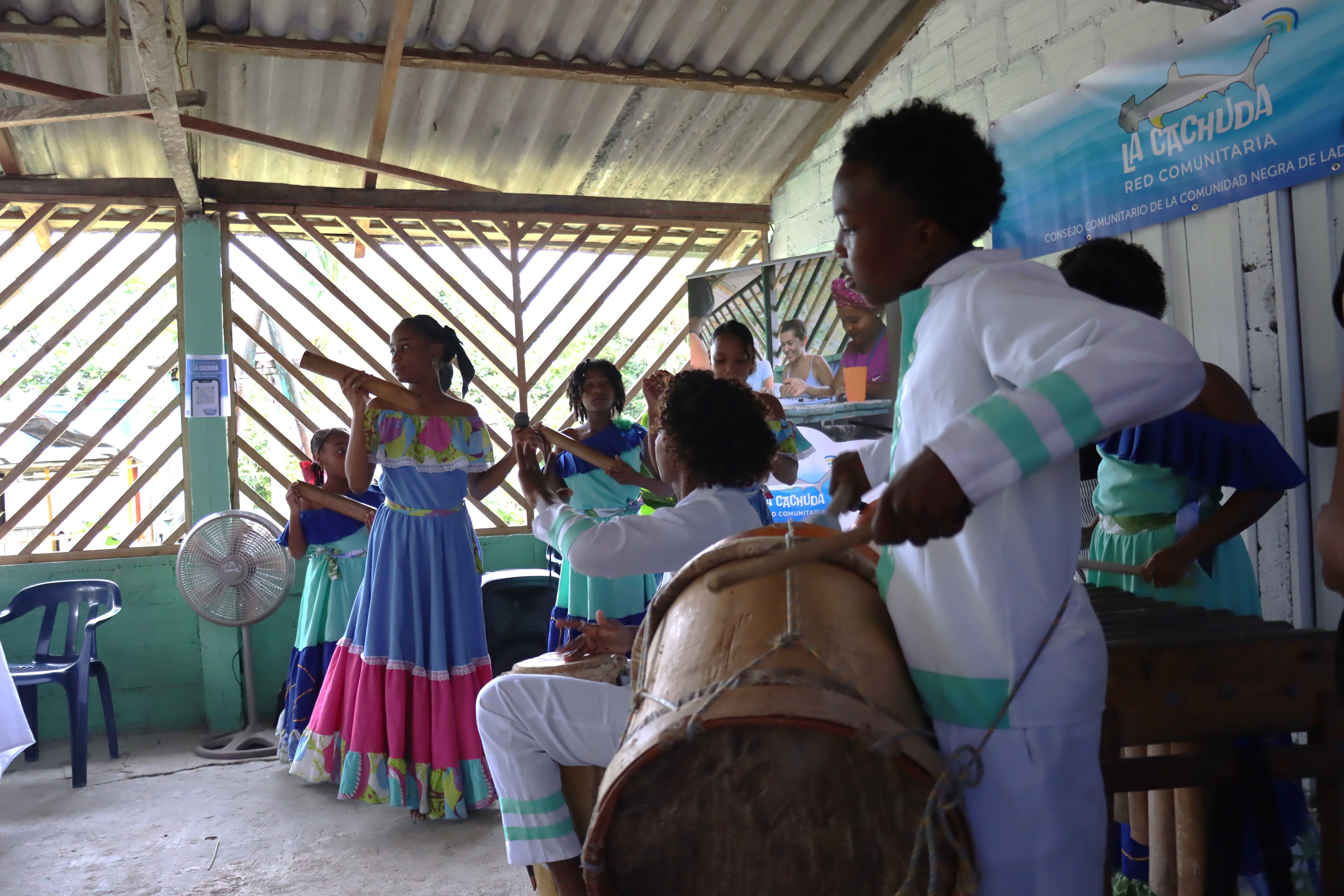
Young musicians in colorful clothing performing beside a La Cachuda community network banner
Escuela Cultural Panas del Pacífico performing at the network launch. Photograph: Colnodo, 2025. Image source. Tap to enlarge.

This photograph shows young musicians performing at the launch of La Cachuda, a community internet network. The celebration took place in Juanchaco and Ladrilleros on Colombia’s Pacific coast. The performers wear colorful clothing and play instruments beside a banner naming the network. Colnodo identifies the group as Escuela Cultural Panas del Pacífico.

I picked this photograph because it puts local culture right next to new technology. The network launch includes music and young people instead of only equipment and speeches. The banner and performance share the same space. To me, that makes internet access look like something the community can make its own.

This connects to the OECD source about connectivity and the affordability study by Hidalgo and Sovinsky. Those sources help explain why getting online involves more than installing equipment. The course themes are tradition and regional diversity. This Pacific community celebrates a new connection through its own cultural expression. The photograph records that moment, but it does not prove the network stayed affordable or reliable. Since Colnodo supported the project, its positive presentation is also part of what I need to consider.

Back to gallery list ↑

Entrega directa en Tumaco, Nariño

Creator
Published by Computadores para Educar. Individual photographer not credited.
Date
Published January 29, 2024. The exact capture date is not listed.
Course themes
Regional diversity · Representation
Technology connection
Computer access for students in Colombia’s Pacific region.
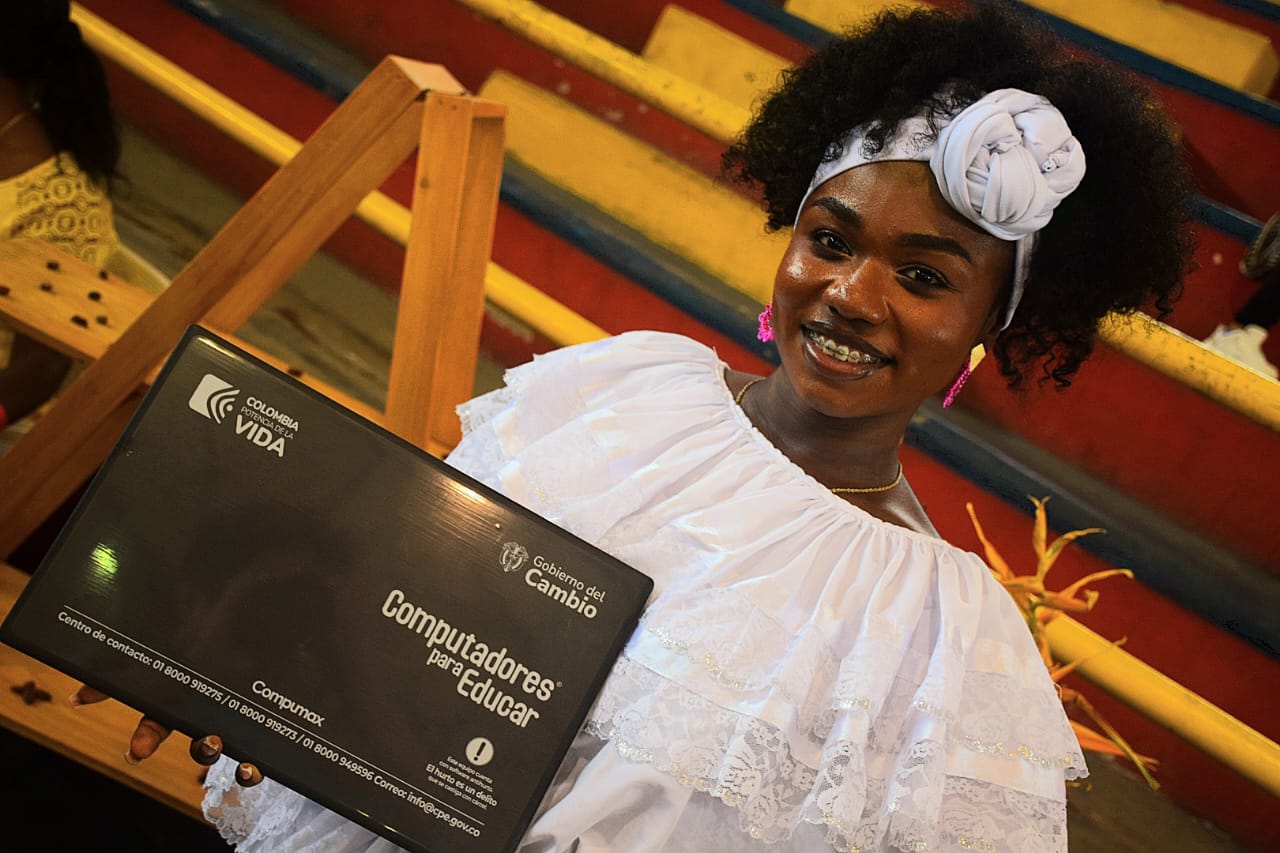
Person holding a Computadores para Educar laptop at a delivery event in Tumaco
Photograph “Entrega directa en Tumaco, Nariño,” image 6753. Computadores para Educar, January 2024. Image source. Tap to enlarge.

This photograph shows a person holding a laptop at a Computadores para Educar delivery event in Tumaco. The program name and government branding are visible on the computer. The image appears in an official gallery about deliveries in Tumaco and Timbiquí. The accompanying account explains that the model allowed students to take the equipment home.

I chose the photograph because it makes the question of computer access concrete. Someone is holding the actual device. The image presents the delivery as a positive public achievement. Still, a photograph cannot tell me whether the computer worked reliably or how it was used after the event. That gap is part of what makes it worth analyzing.

This connects directly to Barrios Aguirre and colleagues’ study of home computer access and exam results. It also connects to Mendoza-Lozano and colleagues’ research on unequal access. The course themes are regional diversity and representation. Focusing on the Pacific region brings places outside the biggest cities into the story. The photograph shows a moment of access, while the research helps me ask what support is needed after delivery.

Back to gallery list ↑

En mi idioma

Creator
Colnodo and participating communities, with APC and MinTIC support.
Date
Project began January 1, 2009, according to the ITU record. The portal has continued to evolve.
Course themes
Tradition · Identity
Technology connection
Digital tools for language learning and cultural preservation.
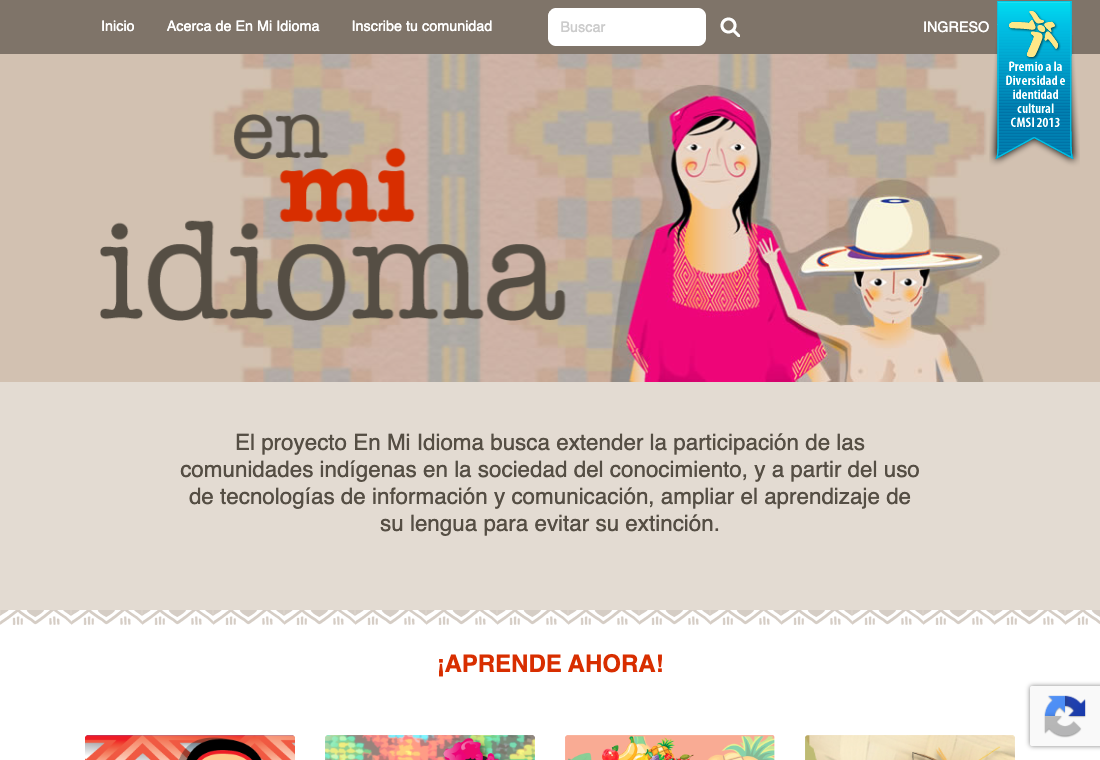
En mi idioma homepage with its language-learning introduction and community artwork
En mi idioma homepage. Colnodo and participating communities. Screenshot captured October 14, 2026. Image source. Tap to enlarge.

En mi idioma is a digital portal supporting community languages and knowledge. Its homepage includes Nasa Yuwe, Wayuunaiki, Nam trik and San Basilio de Palenque. The project began in 2009, although that does not mean every page was created then. It gives digital space to languages and communities that should not disappear behind one dominant language.

I chose it because internet access is more useful when people can find and create content that matters to them. A connection alone does not guarantee that. This portal shows a different purpose for technology. It can help people share knowledge in their own language instead of asking them to leave that language behind.

This connects to tradition and identity. Language carries ways of understanding the world, not just information to translate. The project makes me think about who controls cultural material online. Community authority, consent and continued maintenance matter. I cannot assume that putting something on a website automatically protects it. For my topic, meaningful access includes the ability to represent yourself and decide how your knowledge is shared.

Alongside Zammite’s documentary, it shows why community connectivity should include control over language and cultural content.

Back to gallery list ↑

Reconstrucción

Creator
Pathos Audiovisual, with ViveLab Bogotá and GIZ support. General direction: Álvaro Triana. Conceptual direction and script: Patricia Ayala Ruiz.
Date
2017.
Course themes
Memory · Peacebuilding
Technology connection
Colombian game development and interactive conflict memory.
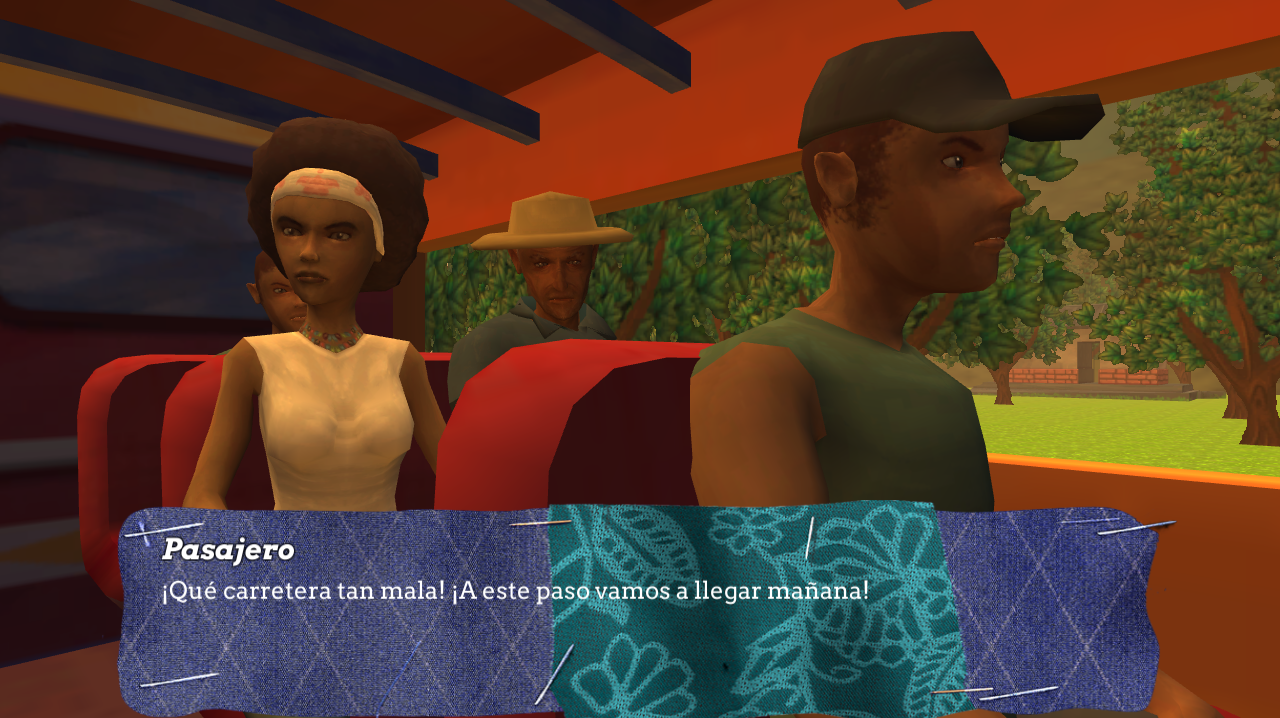
Reconstrucción game scene showing characters riding a bus
Reconstrucción gameplay image published by Pathos Audiovisual. Image source. Tap to enlarge.

Reconstrucción is a graphic adventure about Colombia’s armed conflict. The game is part of a wider project that also includes short documentaries, a comic and a website. It uses digital storytelling to engage people with situations shaped by conflict. The project page provides its credits and a trailer.

I selected it because games can address serious questions as well as entertain. Making choices in a story can ask players to pay attention in a different way from reading a report. This is an example of Colombian digital creativity working with social experience. It connects my interest in computing with the question of what software can help people consider.

The course themes are memory and peacebuilding. A game can create space to reflect on the past and on relationships damaged by violence. It cannot reproduce someone’s trauma or replace listening to survivors. Its characters and choices are designed representations. I see its value as an attempt to encourage reflection, not proof that playing creates reconciliation. That distinction matters when discussing what technology can realistically contribute to society.

The World Bank’s focus on digital skills and businesses gives context for this example of Colombian software used for cultural storytelling.

Back to gallery list ↑

En TIC Confío: #PoderDigital

Creator
Ministerio de Tecnologías de la Información y las Comunicaciones, En TIC Confío. Copy hosted by Gobernación de Boyacá.
Date
2020 edition. Exact publication day is not stated.
Course themes
Representation · Identity
Technology connection
Cybersecurity education and responsible participation online.
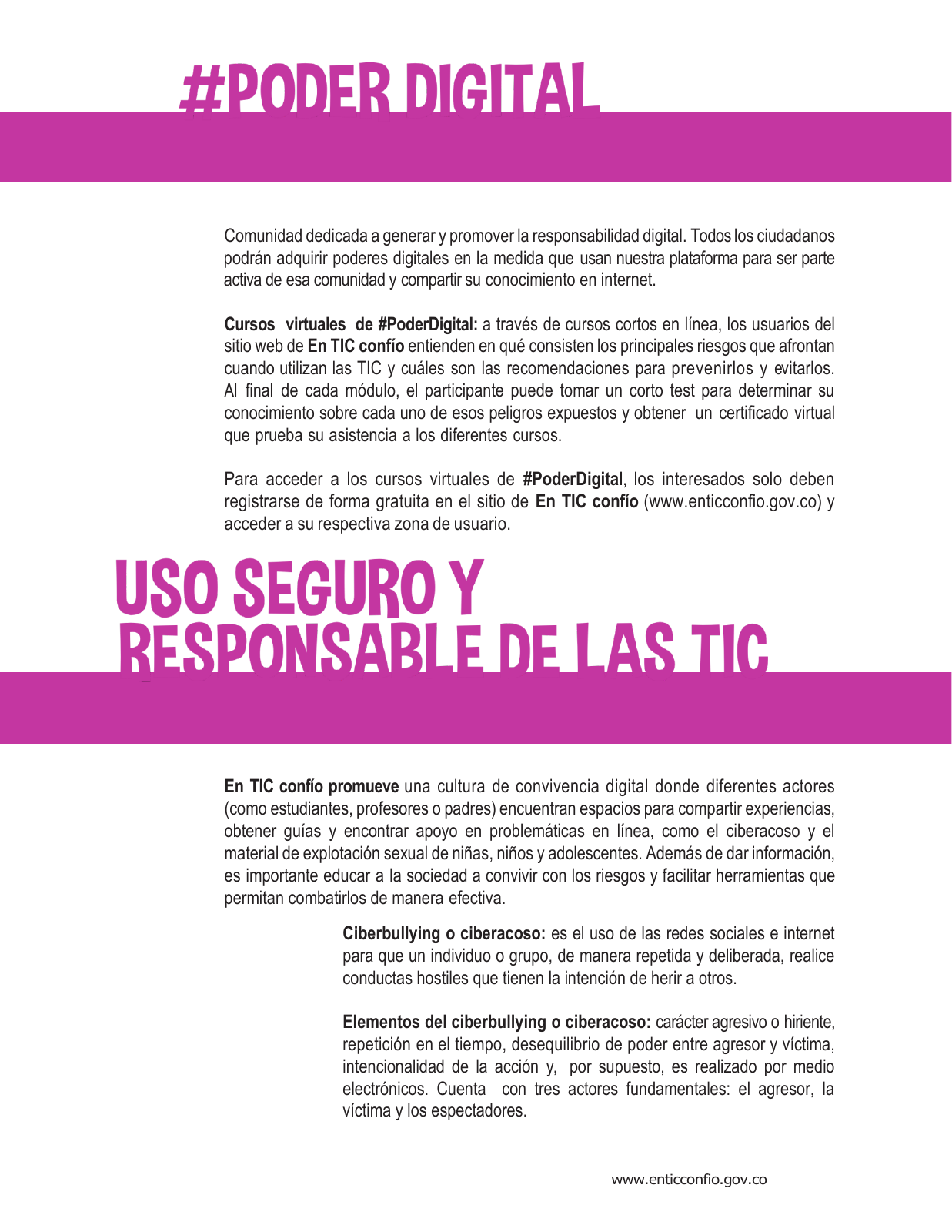
Page from the En TIC Confío brochure with Poder Digital and responsible internet use headings
Page 2 of the 2020 En TIC Confío brochure. MinTIC; archived by Gobernación de Boyacá. Image source. Tap to enlarge.

This brochure is a public communication artifact from Colombia’s En TIC Confío campaign. The selected page uses large pink headings and the phrase Poder Digital. It promotes learning about online risks and treating other people responsibly. Its audience includes students, parents and teachers, rather than only people who work in technology.

I chose it because cybersecurity depends on communication as well as technical tools. The idea of digital power presents people as capable of learning. That is different from only telling them to be afraid. The brochure tries to make safe participation feel like a shared responsibility. Its design and wording are part of that effort.

This connects to Díaz Acevedo and Cremades Guisado’s cybersecurity article. Their discussion of organizational capacity helps me see why public education belongs alongside technical protection. It also connects to the World Bank report’s focus on skills and trust. The course themes are representation and identity. The campaign describes what a responsible digital citizen should be. It shows an attempt to shape online behavior, but the brochure alone cannot prove that the campaign changed what people did.

Back to gallery list ↑